The Art & Science of Cold Process Soap Making: Why We Love This Time Honored Craft
Posted by Karen Zimmer on Jul 1st 2026
Cold process soap making is one of those rare traditions that blends chemistry, creativity, and a little bit of everyday magic. At Faraway Farm Soap, it’s the method at the heart of nearly everything we create. If you’ve ever wondered how your favorite bar goes from raw ingredients to a beautifully cured, skin‑loving soap, here’s a look behind the scenes.
What Is Cold Process Soap?
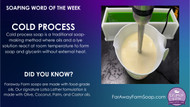
Cold process is a traditional soapmaking technique that relies on a simple but powerful chemical reaction: saponification. Oils and butters are combined with a lye solution, transforming them into soap and glycerin—no external heat required. The result is a bar that’s firm, long‑lasting, and exceptionally gentle on the skin.
Unlike melt‑and‑pour or hot process methods, cold process gives us full control over every ingredient. That means we can craft bars that we carefully formulate for certain skin types. It also allows us to create the signature swirl patterns and textures you see in our soaps—each one a tiny piece of practical art.
Why We Choose This Method
Cold process soapmaking aligns beautifully with our values:
- Ingredient integrity — Oils, butters, clays, and botanicals stay closer to their natural state.
- Eco‑friendly production — No external heat sources, minimal energy use, and biodegradable formulas.
- Skin‑loving results — Naturally occurring glycerin remains in every bar, giving you a creamy, moisturizing lather.
- Creative freedom — From scent blends inspired by Minnesota seasons to natural colorants like clays, cold process lets us design soaps with personality and purpose.
The Process, Step by Step
Here’s how a batch comes to life in our workshop:
- Selecting the oils: Each recipe begins with a blend of plant‑based oils chosen for their unique properties—cleansing, conditioning, bubbly lather, or creamy feel.
- Mixing the lye solution: Sodium hydroxide is carefully dissolved in water. When combined with oils, it triggers saponification.
- Bringing it to trace: The mixture thickens to a pudding‑like consistency. This is when we add essential or fragrance oils, colorants, clays, botanicals, or exfoliants.
- Pouring and swirling: The soap batter is poured into molds and decorated with swirls, layers, or textured tops.
- Curing: After 24–48 hours, the loaf is unmolded and cut into bars. Then each bar cures for 4–6 weeks, becoming harder, milder, and longer‑lasting.
A Slow Craft in a Fast World
Cold process soapmaking isn’t rushed. It’s slow, intentional, and deeply hands‑on — qualities we think matter more than ever. Every bar you pick up has been poured, cut, stamped, and packaged by hand. It’s a small reminder that everyday routines can feel special when the products you use are made with care.
Bringing the Farm to Your Home
Whether you’re drawn to bright citrus blends, grounding herbals, or unscented simplicity, cold process soap offers something for every skin type and every mood. We’re proud to carry on this craft here in Minnesota, using ethical ingredients and eco‑friendly packaging to create soaps that feel good in every way.
<img src="https://tracker.metricool.com/c3po.jpg?hash=dc4a0a261fc3f451587288cdc67e1df0"/>
If you’ve never tried cold soap before, consider this your invitation. Your skin will notice the difference.